The Manager Is the Change Plan
If the managers cannot explain it, the change isn’t ready. Brief managers before the room, not after.

In my last article, I argued that people do not resist change. They resist being surprised by it. That raises a practical question: who stands between the surprise and the person? The answer is the manager.
One Level Down
People form their view of a change one level down. The announcement sets the direction, but the manager is where it lands, gets explained, gets questioned, and either earns trust or loses it.
Managers absorb the same change themselves. They are usually handed a directive, not time or context. So the message arrives thin or late, and then we are surprised.
The Readiness Test
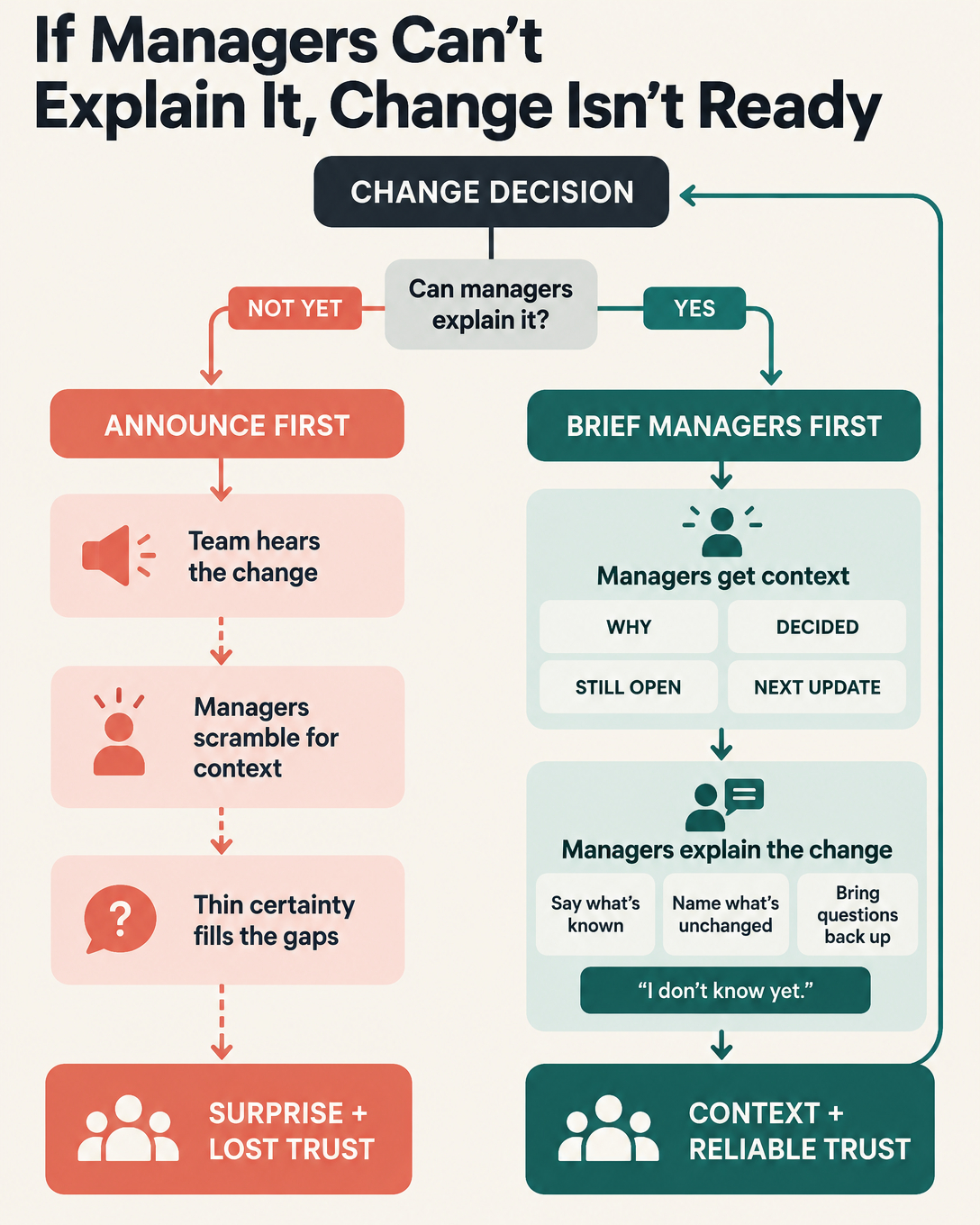
If the managers cannot explain it, the change isn’t ready. That sentence turns manager readiness into a diagnostic. When managers stumble on the explanation, something upstream is broken.
Brief managers before the room, not after. Give them four things: the why, what is decided, what is not, and when you will come back. Then give them time to talk it through with their teams, beyond simply implementing it.
Measure two things: whether managers can explain the change, and whether they were briefed before the room. You can check both before the announcement goes out.
"I Do Not Know Yet"
A manager's credibility comes from being reliable about the process of getting answers. Having every answer on day one is unnecessary. Four behaviours carry that credibility:
- Say what you know and what you do not know.
- Keep the small promises. Come back when you said you would.
- Name what is not changing.
- Bring the questions from the floor back up.
Senior leaders have one job here: let managers say "I do not know yet" without penalty. A manager who fears that sentence fills the silence with thin certainty, and the team reads the difference instantly.
The One Thing to Take With You
If the managers cannot explain it, the change isn’t ready. Brief managers before the room, not after.