If You Can’t Replay It, You Didn’t Decide It
Clarity on priorities and on “done” is a leadership job, and it starts well before anything ships.


Clarity on priorities and on “done” is a leadership job, and it starts well before anything ships.
The short version: When product teams aren’t clear on priorities and on what “done” means, dates slip, features ship half built and hand-offs break. Leaders fix it by aligning early, defining done together, gating hand-offs and catching slippage early. You can test where your company stands this week with three people.
- A decision only counts if people on different teams can replay it the same way a week later.
- Fuzzy priorities cause missed timelines, incomplete features and broken hand-offs between teams.
- The four fixes: early alignment, shared ownership of done, gated hand-offs and an early warning system for slippage.
- The first move for a CEO or COO is to pause, ask questions across teams and compare the answers.
Ask three people on three teams what “done” means for the same feature. In a lot of companies, you’ll get three different answers.
As a CEO and later a Global COO, I ran into this more times than I’d like to admit. The product team wasn’t clear, with customers or with its own people, on two things: what the priorities are, and what counts as done.
That mismatch causes confusion first. Then tension.
No product lead sets out to be unclear. A lot of the time, people just think a decision got made because it got talked about. Ask each person in that meeting to replay it a week later, though, and the answers don’t match. Different priorities. Different ideas of finished.
So that’s my test now. Can people replay the decision? If they can’t, it wasn’t really decided.
What does unclear decision-making cost a company?
The cost shows up in three places. One of them bugs me more than the others.
First, timelines get missed. When priorities are fuzzy, people work on whatever looks most important to them. Honestly, that’s a fair call when leadership hasn’t given them direction. But effort ends up spread across the wrong things, and the dates slip.
Second, features ship incomplete. This is the one that gets me. If “done” means one thing to the product team and something else to the people getting the work, a feature lands that one side calls finished and the other calls half built.
Both sides feel let down. And both feel they were right, which is what makes it so hard to untangle.
Third, hand-offs between teams break down. Work moves to the next group without the context it needs. That team picks it up, finds holes, and sends it back or works around it. Each pass costs time and goodwill.
None of these is dramatic on its own. Stacked together, they wear a company down. People stop trusting dates and each other’s definitions, and they start protecting themselves instead of moving the work forward.
What it really costs: Fuzzy priorities and a fuzzy “done” lead to missed dates, half-built features and broken hand-offs. After that, trust goes.
How do you fix unclear priorities and definitions of done?
In my experience, it comes down to four things. None of them is fancy.
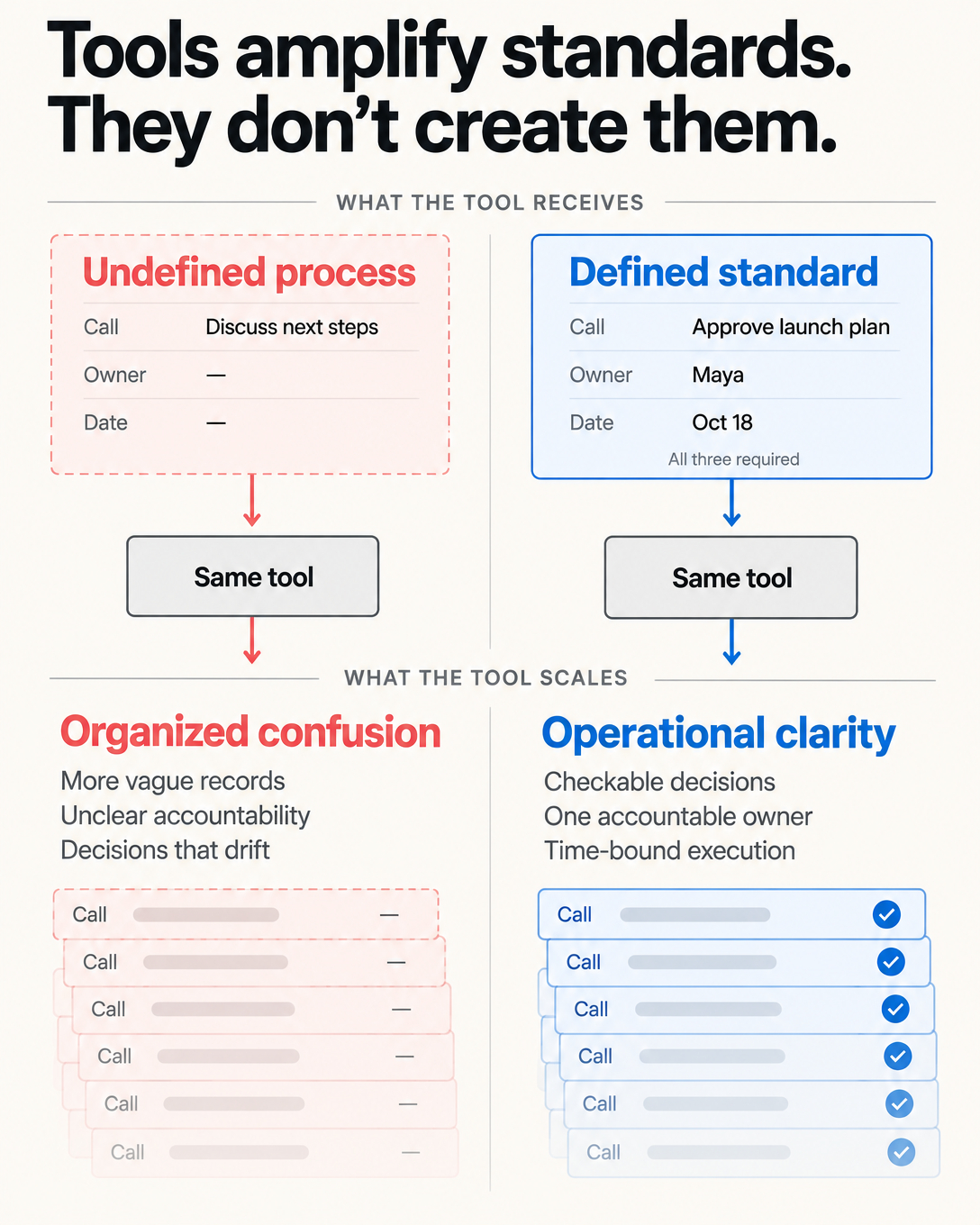
Early alignment on expectations. Put priorities and outcomes on the table at the start. Disagreeing on day one is way cheaper than finding the disagreement at delivery. Early alignment means the people doing the work, the people receiving it, and the customer, where it makes sense, all hear the same thing at the same time.
Shared ownership of done. “Done” shouldn’t belong to one team. If only product defines it, other teams feel it was handed to them. If only the receiving team defines it, product feels it keeps moving. So define it together and write it down. Make it specific enough that two people reading it would land on the same answer.
Clear gated hand-offs. A hand-off should be a moment with criteria. Tossing work over the wall doesn’t count. Before work moves to the next team, there’s an agreed check: is it what we said it would be, and does the next team have what it needs to carry it forward? Yes, gates feel like friction. They also stop a lot more friction later, so I’ll take that trade.
An early warning system for slippage. Things will slip. That’s normal. What matters is how early you find out. Teams need a simple, safe way to raise a flag when a priority, a date or a definition is at risk. The earlier the flag, the more options you have, because late surprises leave you with only bad choices.
These four work together. Alignment sets the target, and shared ownership makes it real. Gates check the work as it moves. The warning system tells you when the plan and reality start drifting apart.
The fix, in one breath: Agree early, define done together, gate the hand-offs and make it safe to flag slippage. They work as a set, so pick up all four.
What should a CEO or COO do first?
When confusion and tension start building between product and the rest of the company, the instinct is to act. Reassign people, escalate, push harder on the date.
My first move goes the other way. Pause all activity. Get curious and ask questions.
Pausing sounds expensive. It’s usually cheaper than continuing in the wrong direction, because if people are working from different ideas of the priorities, more speed just pushes them further apart.
Curiosity matters because the problem is rarely where it first shows up. The team that looks slow may be waiting on a decision. The feature that looks incomplete may match exactly what someone thought was asked. You won’t know until you ask.
Which questions should you ask?
The questions don’t need to be clever. These are the ones I lean on:
- What do you understand the top priority to be right now?
- What does “done” mean for this piece of work, in your words?
- Who did you hear that from, and when?
- What do you need from the team before you, and what does the team after you need from you?
- If this were going to slip, how would we find out?
Ask these across teams, then compare the answers. Where they match, you’ve got a real decision. Where they don’t, you’ve found the spot where the actual work is.
First move, short version: Stop, ask, compare. The answers that don’t match show you where to start.
How can you test your own team today?
Pick one priority your company is working on today. Ask three people from three different teams to describe it, and to tell you what done looks like.
If you get the same answer three times, good. If you don’t, look at how the decision was made before you look at the people. It was never made clearly enough to replay.
I’d count clarity as part of the real work, right from the start. Make the decision clear enough that everyone can replay it.
Frequently asked questions
What does “if you can’t replay it, you didn’t decide it” mean?
A decision only counts if the people involved can describe it the same way a week later. If their answers differ, the decision was discussed but never actually made.
Why do product teams end up unclear on priorities?
People often believe a decision was made because it was talked about. Without direction, each person works on what looks most important to them.
Who should define “done”?
The product team and the receiving team should define it together and write it down. It needs to be specific enough that two people reading it reach the same conclusion.
What is a gated hand-off?
It’s an agreed check before work moves to the next team. The check asks whether the work is what was promised and whether the next team has what it needs to carry it forward.
Why pause work when things are slipping?
Because when people work from different understandings of the priorities, more speed pushes them further apart. Pausing is usually cheaper than continuing in the wrong direction.
How can a leader quickly check for unclear decisions?
Ask three people from three different teams to describe one current priority and what done looks like. If the answers differ, the decision wasn’t clear enough to replay.
Takeaways
- Clarity on priorities and on “done” is a leadership job.
- Unclear decisions lead to missed timelines, incomplete features and broken hand-offs, and over time they wear down trust.
- Define done together, in writing, so two readers reach the same conclusion.
- Gated hand-offs and an early warning system catch problems while you still have good options.
- When tension builds, pause and ask questions across teams before pushing harder on the date.