Quality is what you refuse to reopen.
Quality is the decision you refuse to reopen once it exists as a record.

TL;DR: Quality is the decision you refuse to reopen once it's written down. A decision is a written set: one call, one owner, one date. Reopen it only for new facts, and when you do, write a whole new set.
- Quality starts before the final check. It shows in whether your team keeps a written decision closed.
- A decision is three things on the page: the call, the owner, the date. Alignment is just a feeling in the room.
- Reopening because someone feels uneasy causes rework and delay, because two versions of the call start going around.
- The only real reason to reopen is new information. Then you replace the record in full.
I've worked with teams that did excellent work and still lost weeks. The weeks went to decisions they'd already made, dragged back onto the table.
A check at the end still matters. You look at the result, decide if it's good, and send it back if it falls short. That's useful. The standard I actually care about shows up earlier.
Quality is the decision you refuse to reopen once it exists as a record.
Those teams' work was fine. Some of it was great, honestly. What kept falling apart was the record, and I think it comes down to a mix-up I rarely hear anyone say out loud.
What Is a Decision, Really?
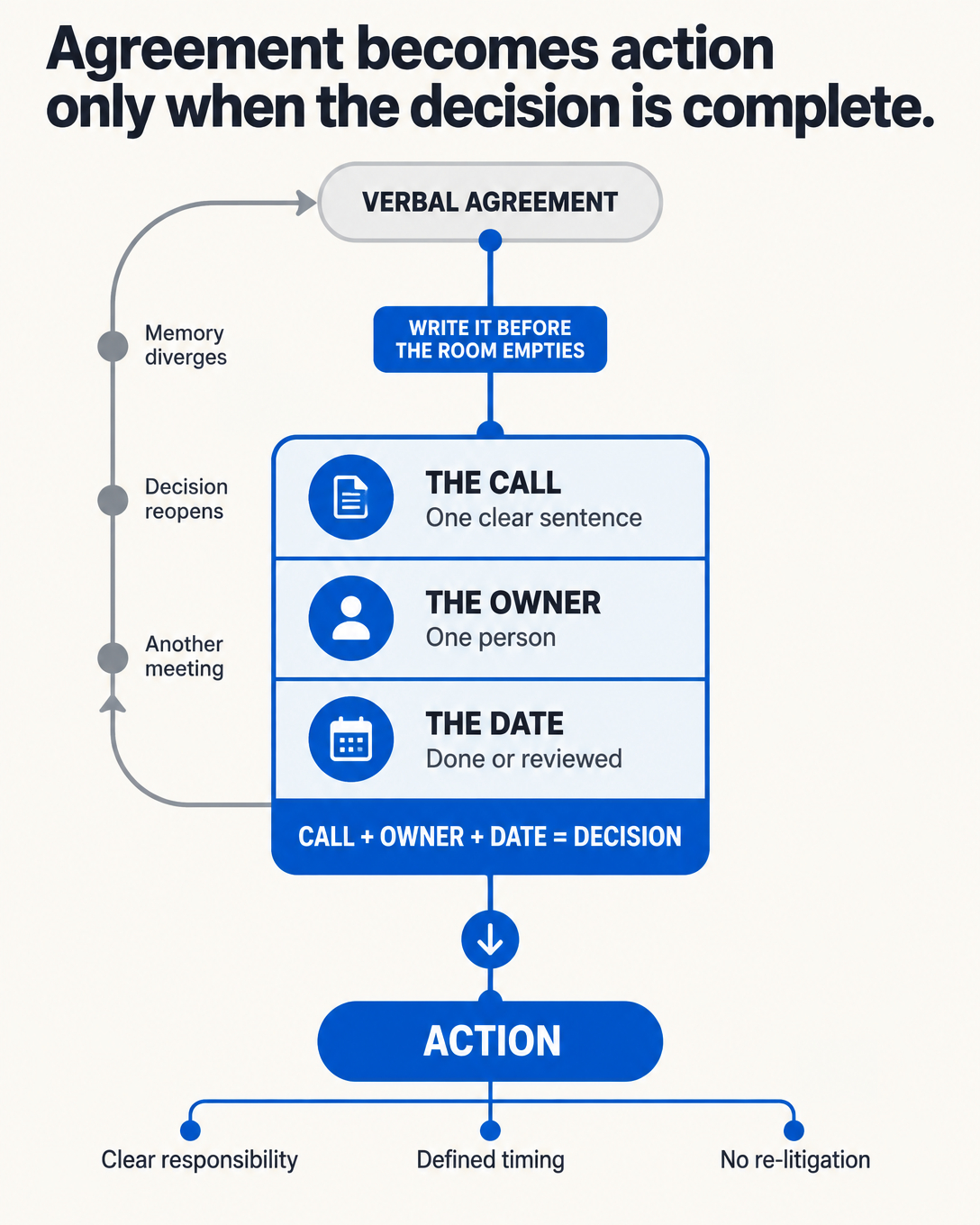
A decision gets real when it's written down as one set. Three parts:
- The call. One plain sentence that states what was decided.
- The owner. One name.
- The date. One deadline.
Call it action items, owners, and due dates if you want. I don't care about the labels. What matters is that all three are written down, together.
How is alignment different from a decision?
Alignment is a feeling in the room. A decision is a record on the page.
Teams walk out of meetings aligned all the time and still treat the thing as open. Everyone nodded. It sounded settled.
Then somebody gets uncomfortable. An old objection comes back in new clothes. A later meeting puts the same question on the table again, and work that had an owner and a date starts over.
That reopen is where quality fails.
The first draft was fine. The awkward end of the meeting was fine too. What broke things was putting a settled record back up for debate because somebody's feeling changed.
Key point: A decision is a written call, owner, and date. Alignment is only a feeling, so it can't hold a decision in place by itself.
Why Does Reopening Feel Like Being Thorough?
This goes way past one bad meeting. It happens any time a team mixes up alignment with a decision, and then mixes up discomfort with new information.
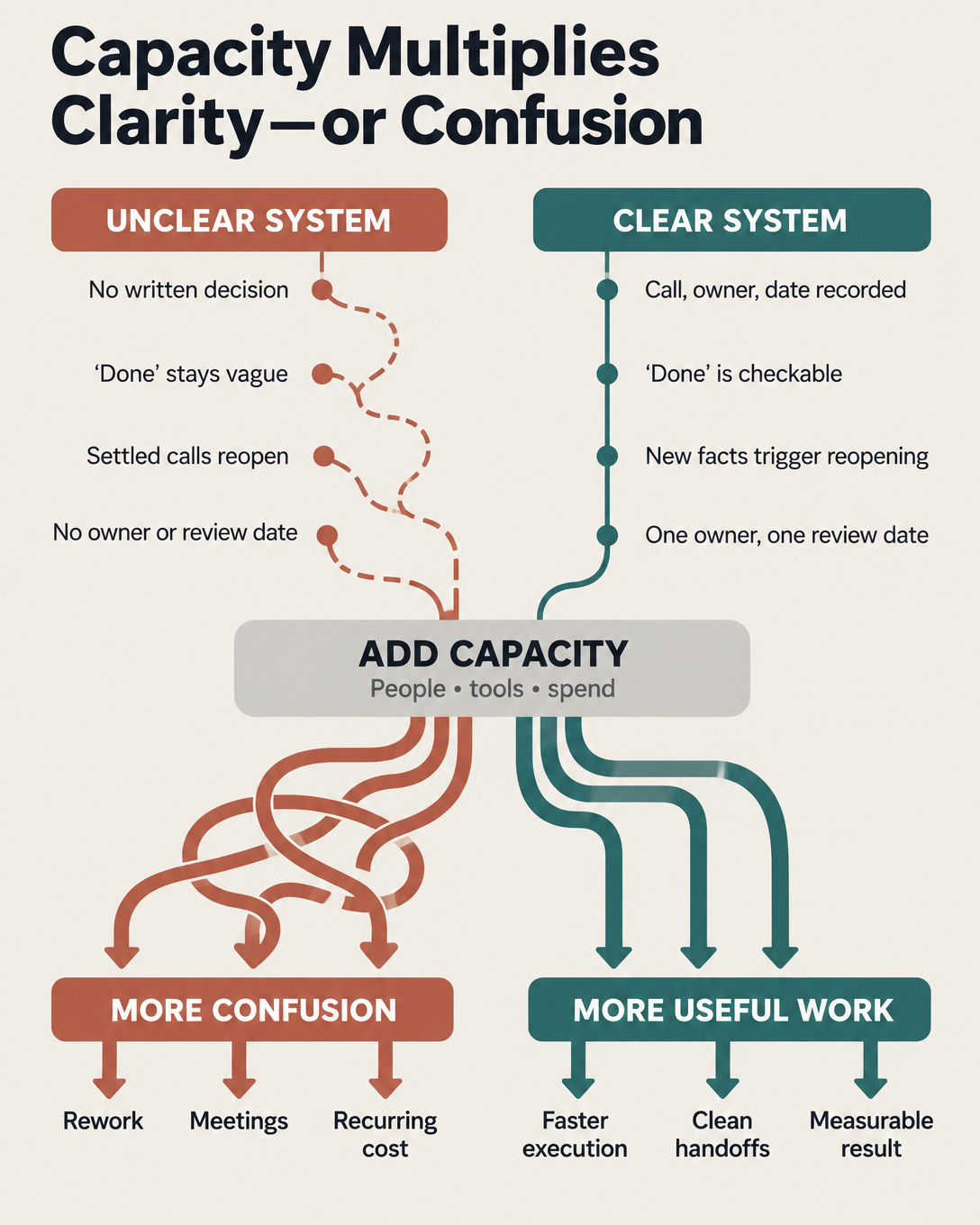
The cost looks about the same every time. The same question comes back. Two versions of the call start going around.
One person keeps working off the written set. Someone else works off the reopened version. The handoff shows up missing a piece, because nobody knows which record is the real one.
So you get rework, and then delay.
And this is the sneaky part. While it's happening, it looks like care. It even feels like diligence, which I think is why teams keep doing it.
Being thorough has a time and a place, and that place is before the record exists.
So argue the call hard. Challenge the owner. Push on the date. Read the full set back before people leave. That's your window. An email two days later is too late, the end of the meeting is where the set gets written.
Once the set exists, quality means refusing to open it again unless you have a reason that would actually change the call, the owner, or the date.
Key point: Push hard before the record is written. After that, reopening only feels careful, and it costs you rework and delay because two versions start going around.
What Counts as a Good Reason to Reopen?
Very little. Here's my list of things that don't count:
- Discomfort. Feeling uneasy is a feeling. The record is the decision.
- A smarter way of saying the same idea.
- A new person in the room who missed the first discussion.
- A tool that shows the decision in a cleaner format.
That last one needs a note. Tools can hold a standard in place, but they can't make one up for you.
If there's no standard, the tool just makes the mess faster. If the standard is written, the tool's job is to keep it in place and keep it visible. A cleaner dashboard is a nicer box, and the box has no opinion about what's inside.
Key point: Discomfort, better wording, new faces, and shiny tools don't count, because none of them change the facts behind the call.
Which Reopenings Pretend to Be Quality?
There are three moves I watch for. Each one looks like care from the outside.
1. The Rewrite of the Call
Someone polishes the words. The meaning shifts a bit. Nobody says out loud that the decision changed.
Now the work downstream is aiming at a sentence the owner never agreed to. That stopped being editing the second the meaning moved. It's a new decision using the old one's name.
2. The Shared Owner
One name turns into a group. The group feels safer. The date stays on the page and nothing moves, because a group can't own an action.
The record was complete. The reopen made it vague.
Vague process is where cost piles up without anyone noticing. This one gets missed a lot, I think because sharing the owner feels generous.
3. The Moving Date
The date slips because the work feels unfinished, even though the scope didn't change. Every slip teaches the team that a date is basically a mood.
A date is part of the record. If it has to change, that change makes a new record. Name who owns the change, write the new date, and retire the old one in writing where everyone can see it.
None of these three moves lets you treat the original set like a draft. Each one is a choice to reopen, and you can say no.
Key point: Rewriting the call, sharing the owner, and sliding the date all feel careful. Each one quietly turns a complete record into a vague one.
When Should You Reopen a Decision?
Only one thing qualifies: new information.
A fact you didn't have when the call was written. A constraint that makes the owner or the date wrong. When that shows up, the old record is done, and pretending it isn't helps nobody.
Here's what you do. Write a new set: the call, the owner, and the date, together, before anyone leaves the conversation. Replace the record cleanly instead of letting versions pile up in people's heads.
Two records going around is where rework starts. So keep one, and replace it in full when the facts demand it.
Key point: New facts are the only valid trigger. Even then, you write a full new set in place of patching the old one.
How Do You Actually Do This?
I want to be honest about how small this is, because it sounds bigger than it is.
- Write the set once, at the end of the meeting. The call in one plain sentence, one owner, one date.
- Read it back out loud.
- Don't reopen it because someone feels uneasy. That unease is real, but it's about the person, and the record is about the work.
- If a real fact breaks the record, write a new one in the open. No side conversations, no quiet edits, and don't let tools, templates, or later meetings sneak a second version into circulation.
Key point: The whole practice is four small steps. You can try it at your next meeting.
How Do You Test Whether a Decision Still Holds?
A team can feel aligned and still hold a bad decision. It can also feel uneasy and hold a good one. The mood mostly tells you about the room. If you want to know about the decision, look at what's written.
So when doubt creeps in, run this check:
- Can you point to the call?
- Is the owner still that one name?
- Has the date moved?
If all three still match what you wrote, leave them closed and keep working.
If they drifted, the problem sits outside the work. You've got a second decision nobody wrote down, and those tend to multiply.
A decision that only lives in memory fades, shifts, and splits into versions. A decision that got written down and then quietly reopened is how quality leaks out of a team that thinks it's being careful.
So leave it closed. If you have to reopen, write a whole new set, with the owner and the date named before you leave the room.
Try it at your next meeting. Write the three parts, read them back, and keep an eye on how much rework you still have a month later.
Key point: When doubt shows up, check the written call, owner, and date. If they drifted, you have an unwritten second decision to fix.
Frequently Asked Questions
What does “quality is what you refuse to reopen” mean?
It means quality depends on keeping a written decision closed once it's set. The final check still matters, but the bigger risk is reopening a settled call.
What's the difference between alignment and a decision?
Alignment is a feeling people share in a meeting. A decision is a written record with a call, an owner, and a date.
What should a decision record include?
One plain sentence stating the call, one owner by name, and one date.
When is it OK to reopen a decision?
Only when new information shows up, like a fact you didn't have or a constraint that makes the owner or date wrong. Then you write a full new set.
Why is a shared owner a problem?
Because a group can't own an action. The date stays on the page, but nothing moves.
What should I do if a deadline has to change?
Treat it as a new record. Name who owns the change, write the new date, and retire the old one in writing where everyone can see it.
Can a better tool fix decisions that keep drifting?
No. Tools hold a standard in place, but they can't create one. Without a written standard, a tool just makes the mess faster.
Key Takeaways
- Quality is the written decision your team refuses to reopen.
- A decision is a set: one call, one owner, one date.
- Alignment is a feeling, so it can't hold a decision by itself.
- Discomfort, better wording, new people, and new tools aren't reasons to reopen.
- New information is the one real reason, and it calls for a full new set.
- Do your arguing before the record exists, then leave it closed.