Attachment Is Not a Turnaround Plan
Put the attachment aside early. Keep the people who want the next chapter. Make reality show up in order.


When you take over a corporate rebuild, turnaround, uplift, or facelift, the room is already full of feeling and angst.
Loyalty to how things used to work. Defensiveness about what once made sense. Soft spots for a product, a process, or a person who is no longer delivering. That attachment looks like care. Left alone, it turns into complacency, and the people who stay pay for it, not to mention the bottom line.
I have walked into enough of these rooms to know the trap. You want to honour what came before. You want people to feel seen. Those instincts are human, and they are how you lose six months protecting a story customers already stopped believing years ago. Again, years ago.
You are not there to protect feelings about the past. You are there to move outcomes, and to bring people with you while you do it. Put the attachment aside early. Keep the people who want the next chapter. Run a sequence that makes reality show up in the right order.
Here is the sequence I use. I do not reorder it because it would feel nicer.
Customers first
Before you redesign the org chart, cut a tool, or rewrite anything about "who we are," sit with the customers. Not on a telephone call, not a Zoom, get in a car, get on a plane, and do it face-to-face.
Not a survey. Not a cleaned-up dashboard. Actual conversations. What hurts. What they stopped trusting. Where delivery slipped. How they describe the business when you are not in the room. Their perception is the truth you inherited, whether the internal story agrees or not.
Deal with that first. Everything else is noise until the people who pay you are heard.
In the first weeks, I ask the team out loud:
- Can we list the top customer pains without hedging or calling them "edge cases"?
- Do we know which accounts are still paying but already shopping — and who owns each one?
- What's the gross margin on each contract?
- When did the President last visit each customer?
- Is there a named person on every material customer risk, with a date and a next move?
- When was the last quarterly business review with each customer?
- Are we still debating brand story while a renewal is soft?
If customer reality is fuzzy, stop. Get clear. Then move.
Quality of service and product — in parallel
Hearing the pain without fixing delivery is just a listening tour. Customers will not stay for your empathy if the product is soft and the service is inconsistent.
While you are still in those conversations, raise the floor on quality. Visible value. Reliable delivery. Fewer surprises. The kind of "good" a customer can feel without a slide explaining it. If people persist in letting quality slide, fire them. They don't belong.
This is practical: what breaks most often, what we promised and missed, and what we will stop shipping until it works. Fix the thing they buy. Fix how it lands. Do both while the customer work is still hot.
Questions I ask in the room:
- Would a customer describe last quarter's delivery as better, worse, or the same — without coaching?
- When something breaks, or a service miss happens, does it get an owner and a close — or just get written down again?
- Did we improve something a paying customer can point to this month?
Wasteless Cost
Once customers are heard and quality is moving, look at the spend that is not helping either.
Software subscriptions nobody owns. Hosting built for a scale you do not have. Tools bought for optionality that never arrived. Vendors that outlived the work.
This is not cutting for the show of cutting. It is wasteless cost: remove spend that does not serve the customer outcome or the quality floor you just committed to. Buying more than you need is a habit, not a strategy.
Complicated infrastructure is often a monument to past fear — and the team knows it.
How I run it:
- Every recurring line gets an owner, or it gets cancelled.
- If two tools do one job, pick one.
- If the stack is more complex than the business that runs on it, simplify before you "optimize."
- Fancy does not equal ready. Ready means paid for, used, and tied to an outcome.
Capital you free here funds the hard work ahead. Capital left in zombie tools pays for standing still.
People — Seats, Fit, and Number
Now the hard calls on people.
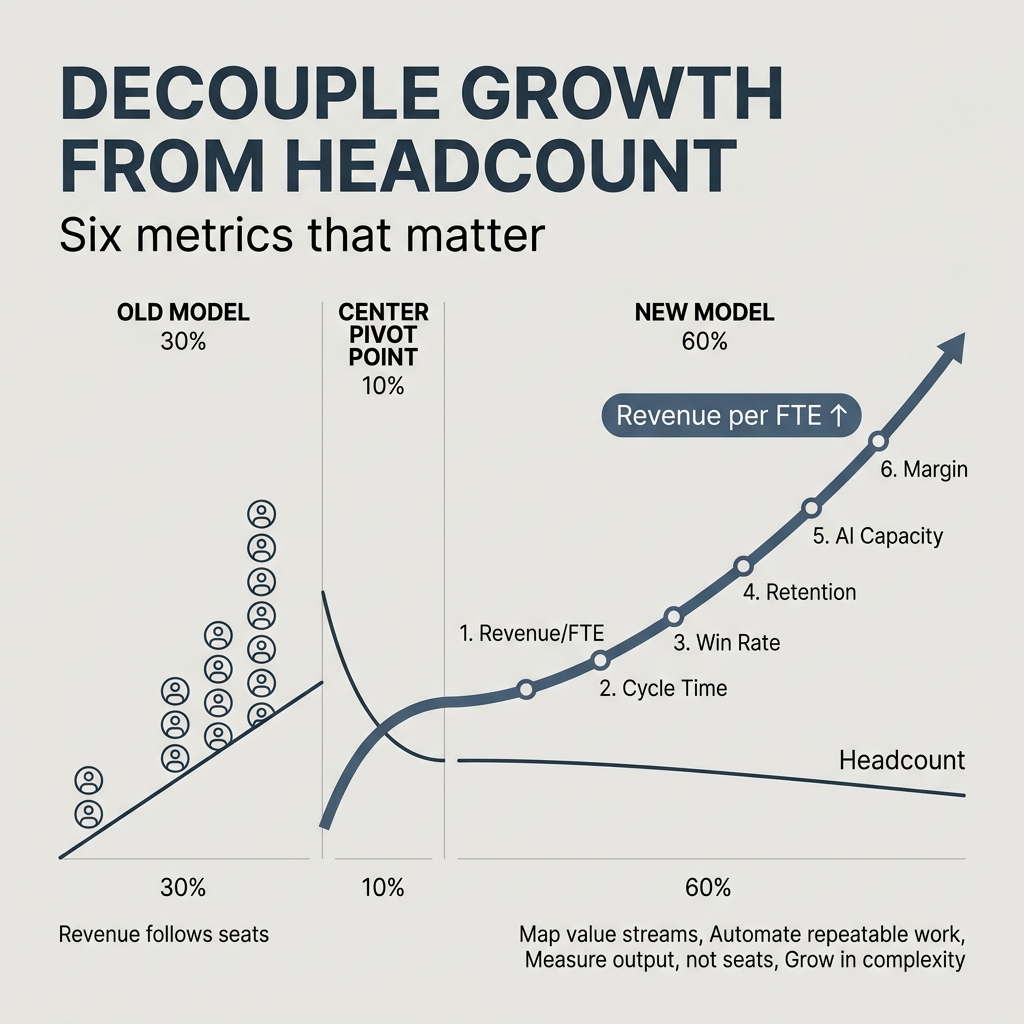
Right people in the right seats. Right number of seats. Not "everyone who survived last year gets a new title." Not headcount as a stand-in for momentum.
Some people will fit the next chapter. Some will not. Some roles exist because the org chart got lonely. Attachment shows up hardest here — loyalty to tenure, to history, to the story that we cannot lose them.
You still make the call. Soft seats produce soft outcomes. Understaffed critical work produces churn. Overstaffed work that does not matter produces burn with no lift. The people who stay deserve a shape that can win.
Before any reorg deck goes out, I ask:
- Which seats are load-bearing for customer and quality outcomes — named, not implied?
- Which seats exist mainly because cutting them feels rude?
- Who is in a seat they cannot win from — and how fast do we resolve that with dignity and clarity?
- Are we sizing the team to the work that remains after waste is gone, or to the org we wish we still needed?
People work is not optional because it is uncomfortable. It is required — and the people who stay feel that weight every day.
Culture Last in this Sequence
Unified culture matters. A team that trusts each other, tells the truth early, and rows in one direction will outrun a team that does not.
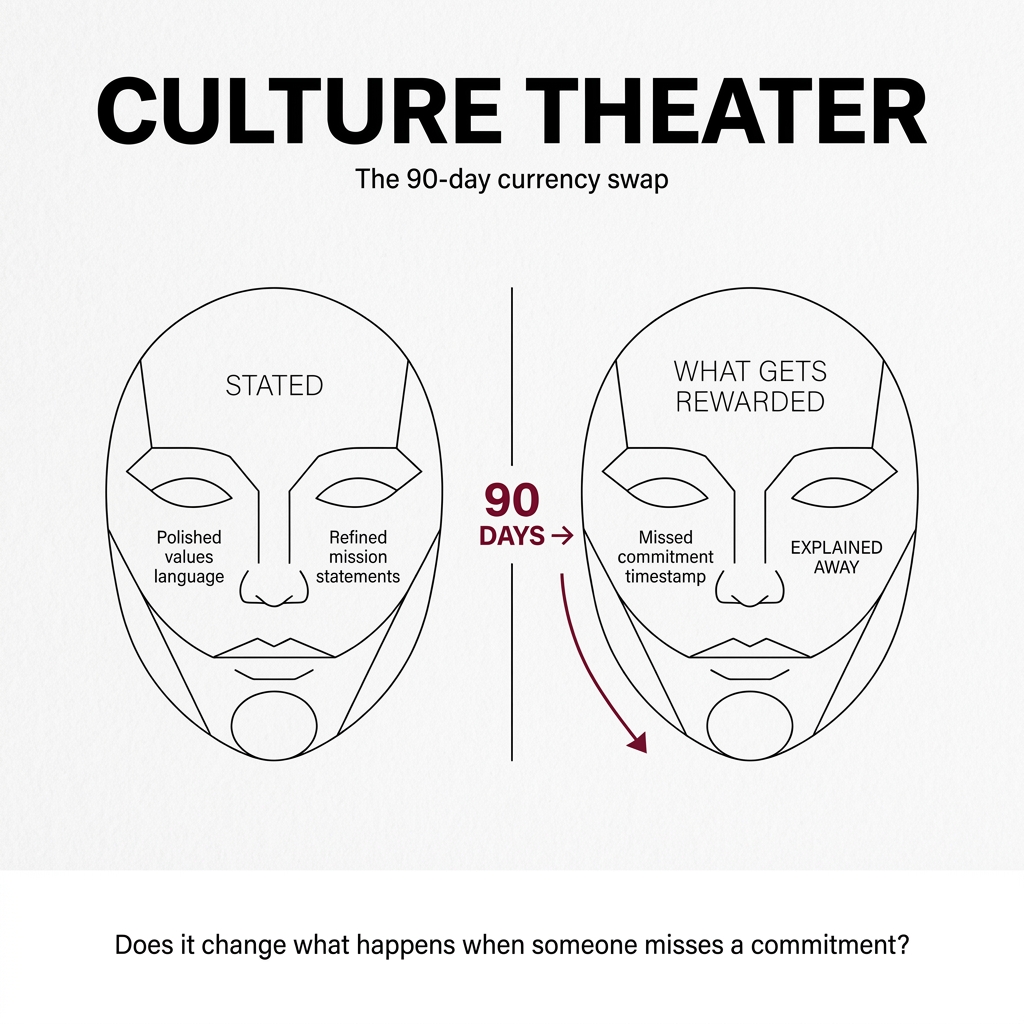
But culture is hard to get right when the earlier steps are unfinished. If customers are ignored, quality is soft, waste is funded, and seats are wrong, "culture work" becomes workshops about feelings while the business stays sick. Attachment dressed up as values.
Culture sticks after the operating facts are honest: customers heard, value visible, spend tight, people in seats that match the work. Then you can build the habits that matter on ground that can hold them.
Do not start with the offsite. Earn the right to talk about who we are by fixing what we do.
Emotion and attachment breed complacency when you inherit a company that needs a rebuild. Put them aside. Focus on outcomes. Bring people with you, not by protecting the past, but by making the next chapter real in the right order.
That sequence is not cold. It is how you respect the people who stay: you give them a business that works.
P.S.: Be visible, don't hide in an office, meet with the team and get to know them.