
The Dark Side of the Moon Is a Museum Piece
I respect Pink Floyd. I respect the musicianship. I just don't connect with the music.

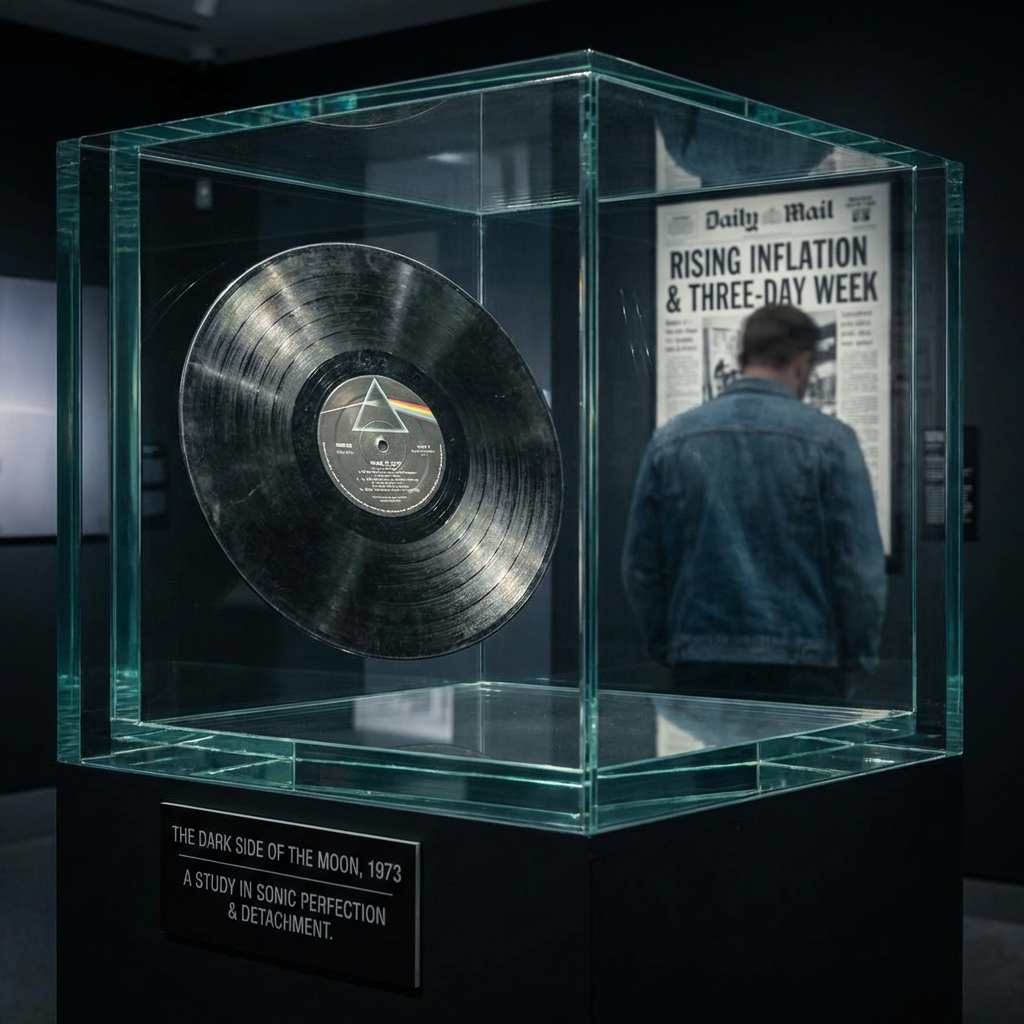
I respect Pink Floyd. I respect the musicianship on "The Dark Side of the Moon." I respect that iconic bass line on "Money," the technical precision, the months spent at Abbey Road perfecting every sound.
I just don't connect with the music.
This nearly 53-year-old album sits behind glass now, a historical marker from a time when the world was changing and progressive rock was too comfortable in its own sophistication to notice. While oil prices quadrupled and Britain entered recession in late 1973, Pink Floyd spent approximately 60 days in the studio, using some of the most advanced recording technology ever produced. They set up mic stands with yards of tape doing circles just to capture the perfect sound of cash bags dropping onto the studio floor.
The contrast is staggering.
The Problem Isn't the Message
When I listen to "Money," I recognize what it's doing. The groove is okay. It reminds me of economic uncertainty. The song critiques capitalism.
But here's what happens: you get lost in the sonic ecstasy instead of getting the message.
The album isn't working-class in its musical grit. Perfection in simplicity is more attainable for all. Pink Floyd chose polish over rawness, studio perfection over street-level authenticity. That choice matters more than the lyrics ever could.
The medium contradicted the message.
1973: When the World Cracked Apart
This was the year of the oil crisis and stagflation. The post-World War II assumption—industrial growth equals permanent prosperity—was collapsing. CPI inflation peaked at 25% while unemployment hit 5.7%. Britain was literally put on a three-day work week to conserve energy.
Pink Floyd made an album about pressure and madness while enjoying unlimited studio time and resources.
Could they have achieved the same impact without the slick production? Yes. Did they? No.
The album explores events and pressure, but the production becomes a distraction, almost a narcotic that dulls the very anxiety the album claims to explore. When you're crafting perfect sonic architecture while the country rations electricity, you're not documenting struggle. You're observing it from a safe distance.
What Punk Understood
When punk arrived a few years later, the rawness was the message. Sonic, dirty, sleazy, and a middle finger to the establishment.
Pink Floyd had become that establishment.
Johnny Rotten wore a Pink Floyd T-shirt with "I HATE" scrawled above the band's name. He was a huge fan of Hawkwind, Van Der Graaf Generator, and Can. He hated what Floyd represented, not necessarily all prog.
He hated the comfort. The aspiration. The detachment.
Punk's roots lay in economic dislocation. Youth joblessness above 20% in industrial cities. The DIY punk ethos wasn't just aesthetic—it was economic necessity for kids who couldn't afford 60 days in Abbey Road. Over-producing takes away from a musician's raw art. Punk understood this instinctively.
The Album's Success Undermined Its Own Thesis
The album has sold over 45 million copies worldwide. The success brought wealth to all four members. Wright and Waters bought large country houses. Mason became a collector of upmarket cars. Some profits were invested in Monty Python and the Holy Grail.
An album about the pressures of modern life and mental breakdown made them millionaires who bought country estates.
Even session singer Clare Torry, who provided those haunting vocals, remembered the band explaining the album was about "birth, and all the shit you go through in your life, and then death." She said "I did think it was rather pretentious." She was paid only £30 for her contribution.
The slickness became the story, not the struggle.
Progressive Rock Found Its Niche
I'm not saying this album created a barrier between the music and the people who might need it most. It found its audience—a small but rabid subset of fans who love the technical complexity and conceptual ambition.
Just not me.
The album isn't challenging enough in its thinking. 1973 demanded confrontation with collapsing assumptions. The Brits were getting economic devastation in spades. American Top 40 was dominated by British artists exporting sophistication while their home country faced austerity.
What should Pink Floyd have been addressing? The same things they claimed to address, but with the urgency the moment demanded. Instead, the production offered escape through sonic perfection.
Change Is Inevitable
By 1977, Pink Floyd had become everything that needed to be torn down. In my opinion, over-producing takes away from a musician's raw art. The album represents a specific approach to making rock music that had to be destroyed for something better to emerge.
When I listen to "Dark Side of the Moon" now, it's absolutely a museum piece. A historical marker at a time when the world was changing and one band chose studio perfection over authentic engagement with that change.
What does it teach us, sitting there behind glass?
That technical mastery without emotional grit creates distance. That you can critique capitalism while benefiting enormously from it. That sometimes the most polished art is the least honest.
I respect the musicians. I respect what they accomplished within their chosen framework.
I just wish they'd chosen a different framework.


